
Sooner or later every growing importer asks the same question: should we lease our own warehouse and run it ourselves, or hand storage and distribution to a third-party logistics provider (3PL)? There’s no single right answer, but there is a clear way to work it out.
What you take on with in-house warehousing
Running your own shed gives you full control: your people, your systems, your hours. It also means taking on every cost and risk that comes with it:
- A lease, usually several years, sized for your peak volume, not your average.
- Racking, forklifts, maintenance, insurance and safety compliance.
- Staff to receive, unpack, store, pick and dispatch, including cover for leave and busy weeks.
- A warehouse management or stock system, and someone to run it.
- Transport, either your own trucks or carriers you manage.
For a business with steady, high volumes and specialised handling needs, these fixed costs can make sense. For many importers, they don’t.
What a 3PL changes
With a 3PL you pay for the space and handling you actually use. The provider carries the cost of the building, the equipment and the people, and spreads it across many clients. You get:
- Flexibility. Storage that goes up and down with your volumes and seasons.
- Fewer handovers. If the same provider collects from the wharf, unpacks and stores, freight isn’t moved between three companies.
- Equipment you couldn’t justify alone. High-reach forklifts, a reach stacker, heavy-lift forklifts, attachments.
- Visibility. Stock scanned in and out and visible online.
Five questions to help you decide
1. How steady are your volumes?
If your pallet count swings a lot through the year, paying for a shed sized for the peak means paying for empty space most of the time.
2. How much of your freight arrives in containers?
If most of your stock lands in containers, having one provider handle cartage, the unpack and storage saves time and reduces damage from double handling.
3. Do you need specialist handling or approvals?
Heavy or awkward freight, long lengths, or goods that need biosecurity treatment all require equipment and approvals that are expensive to set up yourself.
4. What would you rather your team spent time on?
Every hour spent managing forklifts and rosters is an hour not spent on sales, buying or customers.
5. What does the full cost really look like?
Compare a 3PL quote against the whole in-house cost: lease, outgoings, equipment, staff, insurance, systems and transport, not just the rent.
A middle path
Many importers keep a small showroom or pick face of fast-moving stock at their own premises and use a 3PL for container unpacks, bulk storage and replenishment. It keeps control where it matters and moves the heavy lifting to someone set up for it.
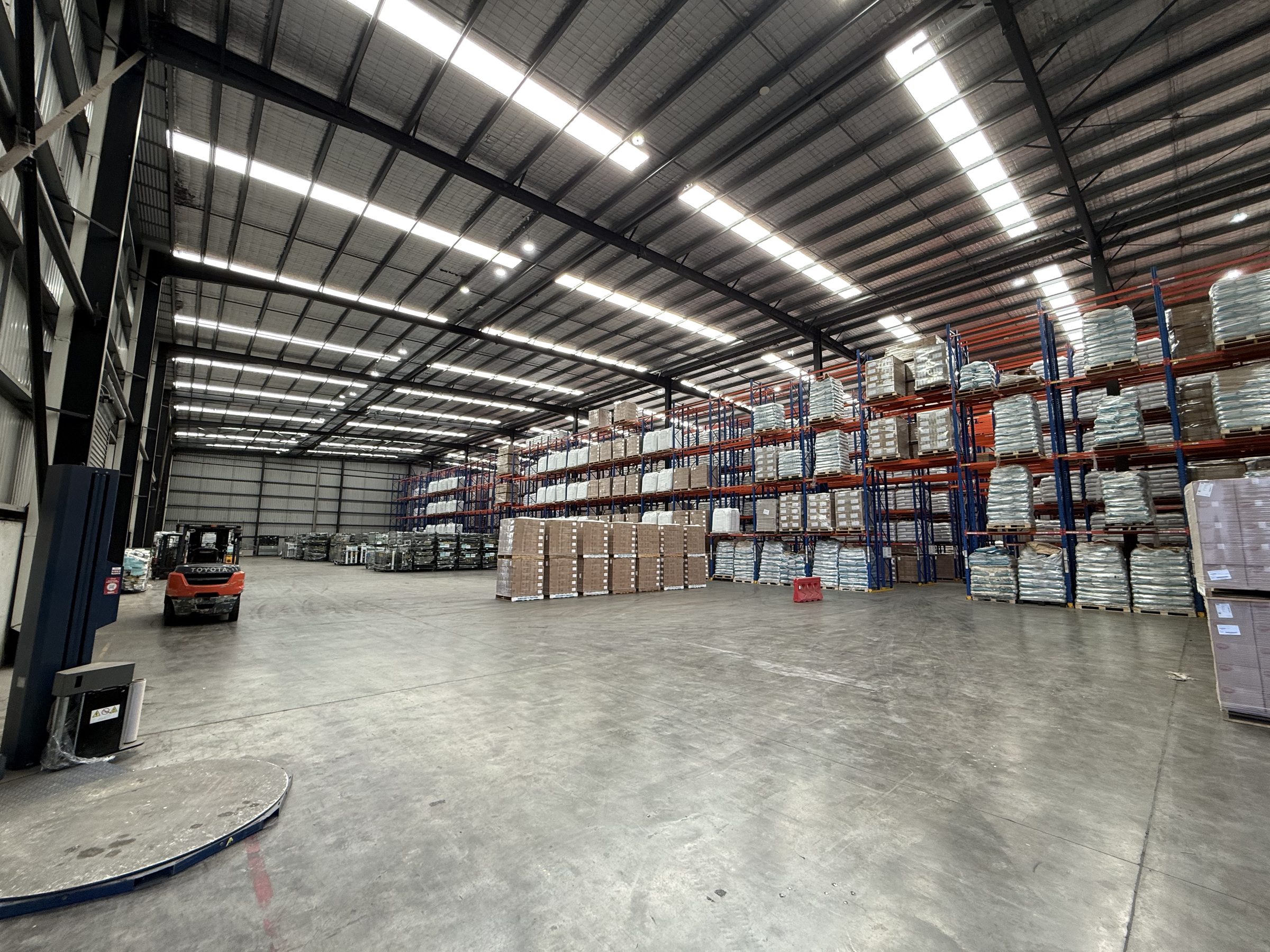
Our Laverton North depot has 8,550 racked pallet spaces across two warehouses, with containers collected, unpacked and stored on the one site.